


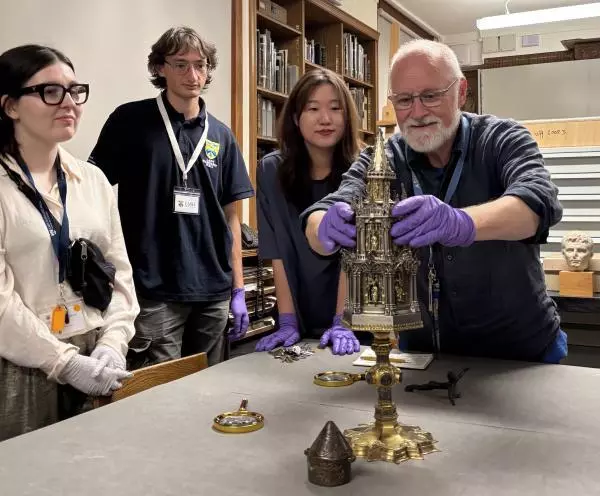
Top course
Oxford, United Kingdom
Museum Studies: Collection, Curation, and Colonialism
When:
29 June - 17 July 2026
Credits:
7.5 EC
Read more
History & Political Science Summer Course
When:
20 July - 31 July 2026
School:
Institution:
Vrije Universiteit Amsterdam
City:
Country:
Language:
English
Credits:
0 EC
Fee:
938 EUR

The course provides students with a comprehensive understanding of political, social, and military conflicts in states influenced by the Soviet legacy, including former Soviet republics and states of the former Warsaw Treaty Organization.
Some of these states emerged as a result of the collapse of the USSR, while others were already independent but remained politically and militarily aligned with the Soviet Union through the Warsaw Pact framework.
In total, the course examines approximately twenty episodes of armed conflict. Particular attention will be given to cases such as the Russian–Ukrainian war, the Armenia–Azerbaijan conflict, and the ongoing tensions in Moldova, Georgia, and other tensions caused by Russian hybrid influence.
One of the central focuses is postcolonial analysis of Russia and the USSR as imperial formations, particularly in the late-Soviet and post-Soviet periods. Another focus is the study of propaganda and information influence in the digital society, including how hybrid information strategies provoke or sustain pockets of military and political tension in post-colonial contexts.
The subject of the course is the study of the nature, consequences, and narrative framing of these conflicts, along with the political, ethnic, and socio-cultural processes driving them. The course engages with conceptual frameworks such as neo-imperialism, postcolonialism, post-communist transformation, waves of democratization, and civilizational conflict.
The course addresses the nature, consequences, and evolving narratives of contemporary conflicts, including the shift toward the “war of narratives” and the growing role of drone, cyber, and remote warfare technologies in shaping both military practice and public perception.
Finally, the course examines peacebuilding and negotiation strategies, including contemporary approaches and practical peacebuilding initiatives in the region.
Bogdana Cherniavska
The course is primarily designed for Master's students in law, international law, political science, sociology, and other related fields. It is also beneficial for PhD students conducting research. The course is assessed at master's level.
Master's students: Students pursuing degrees in fields such as International Relations, Legal, Political science, Religious studies, Sociology.
Researchers and Academics: Researchers, scholars, and academics seeking to deepen their understanding of international and interfaith conflicts and their resolution approaches.
Professionals and Practitioners, Mediators: Professionals working in government agencies, international organizations, non-governmental organizations (NGOs), and religious institutions involved in conflict resolution, diplomacy, peacebuilding, and interfaith dialogue.
Community Leaders and Religious Leaders: Community leaders, religious leaders, and clergy members interested in fostering tolerance, dialogue, and conflict resolution within their communities and congregations.
Individuals Seeking Personal Growth: Individuals with a general interest in global affairs, peace, and conflict resolution who wish to expand their knowledge and develop practical skills in these areas.
By the end of this course, students will be able to:
- Apply theoretical frameworks: utilize key theoretical frameworks such as postcolonial theory, neo-imperialism, and waves of democratization to understand the transformation and conflict dynamics in the region.
- Critique information warfare: Evaluate the role of digital propaganda and information warfare in shaping political outcomes and provoking conflicts within post-Soviet and post-colonial societies.
- Develop critical and soft skills: Enhance critical thinking, teamwork, and communication skills through group discussions and blog assignments, applying these to real-world case studies and conflict scenarios.
- Analyze hybrid warfare tools and strategies: Identify the mechanisms and components of hybrid warfare, including including the use of economic pressure, narrative construction, etc.
- Assess the impact of digital and drone technologies: Examine how drone warfare, cyber operations, and digital evidence influence both military dynamics and the construction of public narratives in contemporary conflicts.
- Evaluate peacebuilding approaches: Assess peacebuilding and negotiation strategies in the region, considering the challenges posed by hybrid conflict environments and competing geopolitical interests.
Fee
938 EUR, Students
Student or PhD candidate: €1250, student or PhD candidate at any Dutch university or partner university of VU Amsterdam: €1125 Student, PhD candidate or employee of VU Amsterdam, Amsterdam UMC, or an Aurora Network Partner: €938, Non-student: €1500
When:
20 July - 31 July 2026
School:
Institution:
Vrije Universiteit Amsterdam
Language:
English
Credits:
0 EC
Oxford, United Kingdom
When:
29 June - 17 July 2026
Credits:
7.5 EC
Read more
Barcelona, Spain
When:
29 June - 10 July 2026
Credits:
4 EC
Read more

Maastricht, Netherlands
When:
27 July - 31 July 2026
Credits:
2 EC
Read more