



Top course
Amsterdam, Netherlands
Human AI: Modeling, Simulation and Analysis of Adaptive Human Mental, Social and Health-Related Processes
When:
20 July - 31 July 2026
Credits:
0 EC
Read more
Human geography Summer Course
When:
29 June - 17 July 2026
School:
Institution:
UCL
City:
Country:
Credits:
7.5 EC
Fee:
2995 GBP
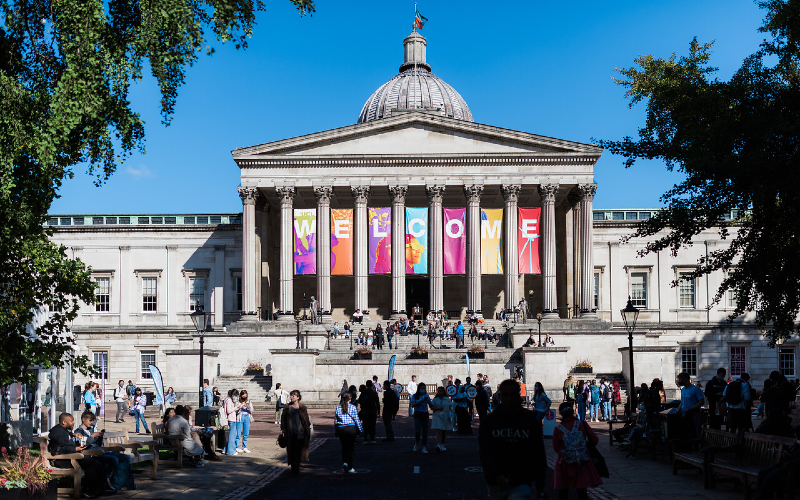

This intensive Summer School module introduces you to how creative ideas can drive meaningful change in communities, organisations, and urban environments. You will experience London as a living laboratory, using its neighbourhoods, green spaces, cultural institutions, and social enterprises as places to observe, analyse, and experiment with new ways of thinking.
Through interactive workshops, you will work with practical methods such as design thinking, systems mapping, and co-design. These sessions help you understand how creative and collaborative approaches can reveal insights, spark new perspectives, and support better decision-making. Light fieldwork, reflective walks, and short observational tasks encourage you to notice how wellbeing, creativity, and city life shape one another in everyday situations.
You will also collaborate in a small team on a real challenge set by an external partner from the voluntary sector, local government, or a socially-minded business. Guided by creative inquiry techniques — from visual mapping to rapid prototyping — you will develop ideas that offer social, environmental, or organisational value. Along the way, you will build confidence in communication, teamwork, and reflective practice, and strengthen skills that support both academic progression and future employability.
By the end of the module, you will have gained hands-on experience of creative problem-solving, explored how London’s diverse communities and urban ecologies shape innovation, and learned how to turn concepts into workable ideas that respond to real-world contexts — in London and in your home cities.
Week one: Foundations of Collaboration
Explore wellbeing as a social, cultural, and environmental concept.
Introduction to UCL Grand Challenges and the UN Sustainable Development Goals.
Workshop: intergenerational and intercultural communication in practice.
Field visit to London green and cultural spaces.
Form project teams and scope initial ideas with community partners.
Week two: Applying Tools to Real Work Case Studies
Investigate how access to parks, gardens, and waterways supports wellbeing.
Examine how green and blue spaces contribute to climate adaptation and community resilience.
Field visits to contrasting London neighbourhoods.
Apply design-thinking and systems-mapping tools to analyse community needs.
Share insights and refine project focus through peer review and tutor feedback.
Week three: Designing and Presenting for Impact
Explore ethical innovation and social sustainability in design.
Translate insights into proposals using the Business or Service Model Canvas.
Develop final group projects with feedback from tutor.
Present outcomes in a closing showcase for peers and partners.
Reflect on learning, employability skills, and next steps for personal and professional growth
Dr Alina Congreve
This module aims to:
- Enable students to understand and apply creative and collaborative methods for addressing complex social, organisational, and environmental challenges.
- Provide opportunities for students to work in interdisciplinary teams; learning how diverse perspectives and creative problem-solving approaches can generate positive real-world impact.
- Develop transferable skills in communication, teamwork, reflection, and innovation that enhance employability and prepare students for professional and academic progression.
- Support students to connect their academic learning with real-world contexts, using London as a living laboratory through engagement with community, business, and voluntary sector partners.
- Encourage students to critically reflect on the processes of change and collaboration, developing awareness of how creativity, ethics, and evidence interact in applied problem-solving.
In doing so, the module reflects UCL’s Grand Challenges and the UN Sustainable Development Goals, encouraging students to consider inclusion, innovation, and resilience as global themes
Fee
2995 GBP
Amsterdam, Netherlands
When:
20 July - 31 July 2026
Credits:
0 EC
Read more
London, United Kingdom
When:
29 June - 17 July 2026
Credits:
7.5 EC
Read more

Belgrade, Serbia
When:
28 September - 08 October 2026
Credits:
4 EC
Read more