


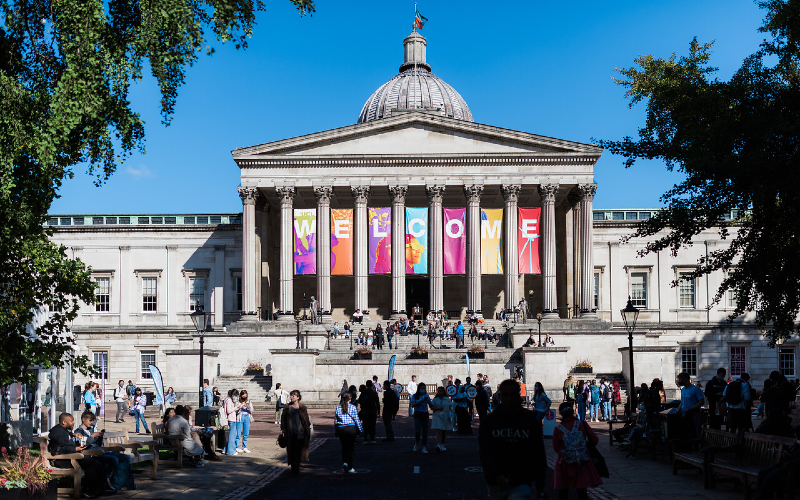
Top course
London, United Kingdom
Anatomy and Developmental Biology
When:
20 July - 07 August 2026
Credits:
7.5 EC
Read more
Healthcare & History & Tourism & Literature & Anthropology & Natural Sciences & Engineering & Linguistics & Life Sciences & Educational Sciences
When:
03 August - 14 August 2026
School:
Institution:
University of Oulu
City:
Country:
Language:
English
Credits:
1 EC
Fee:
625 EUR

Content:
The Arctic’s natural environment is truly unique, with few regions in the world offering comparable landscapes and biodiversity. When foreign students first encounter Arctic nature, they are often fascinated by its richness yet may also feel uncertain or even intimidated by its unfamiliar risks and challenges. This uncertainty may deepen over time as they observe how strongly local residents are connected to their natural surroundings and the deep cultural role that nature plays in everyday life. For instance, students may find it difficult to distinguish edible from poisonous berries or mushrooms, to identify safe areas for hiking and exploration, or to understand the necessary precautions for outdoor activities in the Arctic climate. Nevertheless, engaging with nature and learning about local biodiversity can bring substantial benefits: educational, recreational, and even economic, such as foraging for berries and mushrooms. The proposed course aims to bridge this gap by providing foreign students with a practical understanding of Arctic nature, using Finland as a case example. Through expert-led instruction and hands-on experience, participants will gain the confidence, knowledge, and skills needed to explore Arctic environments safely and meaningfully, which also possible partly apply anywhere around the world.
Learning outcomes:
By the end of the course, students will have gained a deeper understanding of Finland’s unique natural environment and developed the practical skills needed to explore it independently and safely. Participants will be proficient in using biodiversity identification apps, such as iNaturalist, and will be actively contributing to citizen science efforts by collecting valuable data on local species. They will also feel more connected to the Nordic way of life, experiencing the positive impacts of nature on well-being. Additionally, the course will foster a sense of community among participants, promoting cross-cultural exchanges and collaboration. Moreover, all knowledge obtained and practical skills might be applied in students' home countries or everywhere around the world.
Study Methods:
Experiential learning (students engage directly with the natural environment through hands-on activities, including field excursions and a bioblitz what fosters learning through real-world experience and sensory immersion); technology-enhanced learning (the course integrates mobile applications (e.g., iNaturalist, Seek, Pl@ntNet, Laji.fi) to support species identification, biodiversity data collection, and citizen science participation what enables students to apply technology in outdoor and independent learning contexts); collaborative and peer learning (students encourages peer support, exchange of knowledge, and shared problem-solving); game-based learning (the bioblitz is designed as a friendly competition that motivates students to collect biodiversity observations in a playful, goal-oriented format that enhances engagement and retention); inquiry-based learning (students develop their own questions and curiosities during field exploration, which they investigate using identification tools and biodiversity databases, encouraging independent thinking and critical observation); blended learning (the course combines in-person instruction (lecture and fieldwork) with self-paced online exploration and the use of digital tools, offering a flexible and rich learning environment).
Teaching Methods:
The course is participatory and student-centered with lectures, workshops, field excursions and bioblitz.
Time schedule:
Monday: lecture (2 h), workshop (1 h)
Tuesday: field trip to Hailuoto (8 h)
Wednesday, Thursday, Friday, Saturday: Bioblitz (independent field and smartphone / computer work during 4 hours per day (16 h)
Thursday: excursion to the botanical garden (1 h)
Monday: closing session (lecture with discussion) (2 h)
Primary Teaching Language:
English
Person in charge:
Mykyta Peregrym
Fee
625 EUR
When:
03 August - 14 August 2026
School:
Institution:
University of Oulu
Language:
English
Credits:
1 EC
London, United Kingdom
When:
20 July - 07 August 2026
Credits:
7.5 EC
Read more

Aarhus, Denmark
When:
27 July - 31 July 2026
Credits:
5 EC
Read more

Heidelberg, Germany
When:
13 July - 24 July 2026
Credits:
10 EC
Read more