



Berlin, Germany
ReWilding Narratives: Change the Narrative – Change Society
When:
03 August - 09 August 2026
Credits:
0 EC
Read more
Environmental Studies Summer Course
When:
29 June - 03 July 2026
School:
University of Groningen Summer Schools
Institution:
University of Groningen
City:
Country:
Language:
English
Credits:
1.5 EC
Fee:
650 EUR

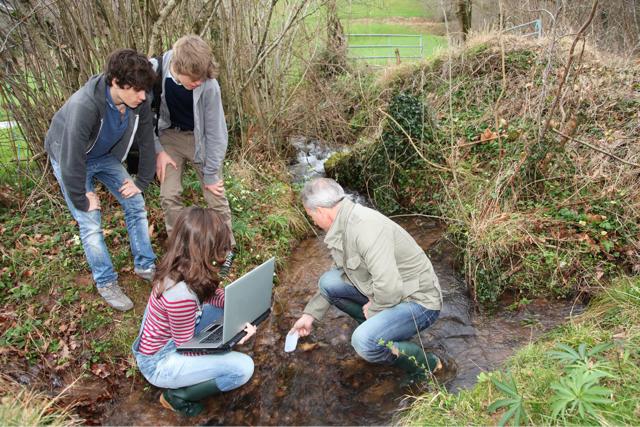
Landscape restoration has become a matter of urgency on the global agenda, as societies seek to halt and reverse biodiversity loss and climate change while securing livelihoods and food production. Agroecology offers alternatives for the design and management of sustainable landscapes that integrate nature conservation, food production and climate change adaptation/mitigation. Landscapes are living spaces where people, multiple land uses and diverse interests intersect, and where decisions ultimately depend on those who live and work on the ground. In this context, participation is essential to promote transitions in socioecological systems and to ensure that restoration pathways are both effective and socially just.
In this summer school on Participatory Processes in Agroecology and Landscape Restoration, you will explore how to design and facilitate participatory processes that connect local actors, scientific knowledge and policy frameworks to co-create resilient futures for degraded landscapes. Over five days, you will be introduced to core concepts in landscape ecology, restoration planning and agroecology, together with theories and tools for participation, facilitation and collaborative decision-making.
Through interactive lectures, group discussions, hands-on workshops and case-based exercises, you will work with real-world restoration experiences from different regions, paying special attention to power relations, knowledge diversity and long-term governance. In small groups, you will co-design restoration scenarios and practice facilitation techniques that you can apply in your own work or research context. By the end of the course, you will be better equipped to engage communities and institutions in transformative restoration processes, navigate conflicts and trade-offs, and translate participatory approaches into concrete landscape outcomes that respond to global calls for transformative change.
P.A. Tittonell & F.N.B. Simas
This summer school is designed for participants of various levels of education and experience, including:
- Individuals interested in learning and acting to promote landscape restoration.
- Master and PhD students, Postdoc researchers and academics involved in projects that require engagement and participation of multiple stakeholders.
- Members of Grassroots Organizations, NGOs and Government Agencies.
- Facilitators and Educators committed to fostering collaboration and innovation.
It is expected that the participants have a sufficient command of the English language to actively participate in the discussions and to present their own work in English.
Learning outcomes
We expect that after this course the participants will:
- Understand landscapes as socioecological systems and the key aspects to restore and foster multifunctionality.
- Be able to design participatory processes that fit the needs of the projects they are involved with.
- Feel comfortable to facilitate participatory processes and know where to search for more advanced skills.
- Have gained knowledge and inspiration from examples of participatory processes in landscape restoration projects in Europe and Latin America.
Workload
- Preparation: 2 hours
- Lectures: 32 hours
- Group work: 8 hours
Upon successful completion of the programme, the Summer School offers a Certificate of Attendance that mentions the workload of 42 hours (28 hours corresponds to 1 ECTS). Students can apply for recognition of these credits to the relevant authorities in their home institutions, therefore the final decision on awarding credits is at the discretion of their home institutions. We will be happy to provide any necessary information that might be requested in addition to the certificate of attendance.
Fee
650 EUR, for all participants other than BA students
Fee
325 EUR, for BA students
When:
29 June - 03 July 2026
School:
University of Groningen Summer Schools
Institution:
University of Groningen
Language:
English
Credits:
1.5 EC
Berlin, Germany
When:
03 August - 09 August 2026
Credits:
0 EC
Read more
Wageningen, Netherlands
When:
19 August - 28 August 2026
Credits:
0 EC
Read more

Reims, France
When:
29 June - 03 July 2026
Credits:
0 EC
Read more