



Joensuu, Finland
Environmental Collaboration and Conflict Resolution (ECCR)
When:
17 August - 21 August 2026
Credits:
5 EC
Read more
Political Science Summer Course
When:
29 June - 17 July 2026
School:
Institution:
UCL
City:
Country:
Language:
English
Credits:
7.5 EC
Fee:
2995 GBP
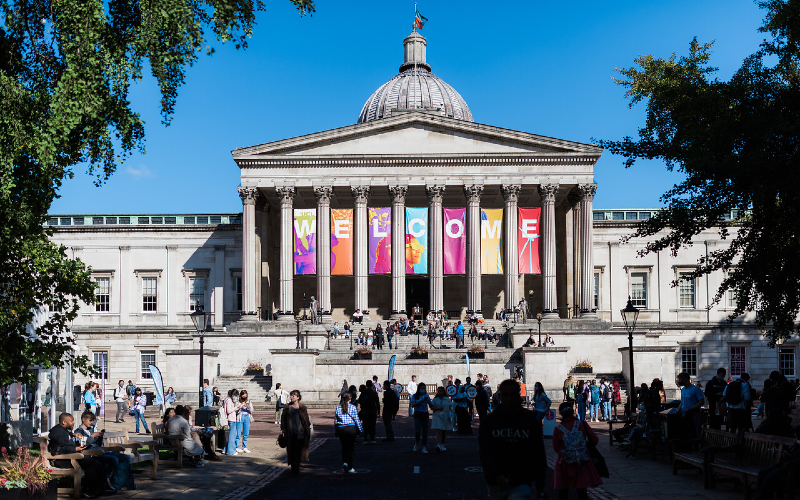

This course introduces you to the rise of populism and its impact on contemporary global politics.
It will explore how populist movements have reshaped politics in the United States, Europe and beyond. The course will analyse the success of Donald Trump and the MAGA movement in the United States, Brexit in the UK, and the rise of authoritarian parties in Hungary and Poland as well as the spread of populist leaders across Latin America and Asia.
The course will examine competing explanations of populism, evaluating claims that populism speaks for ‘the people’ alongside concerns that it may undermine democratic institutions.
You will also explore the historical origins of populism and consider the extent to which populism represents a long-term historical trend or a new political phenomenon. In particular, the course will focus on explanations based on ideas of cultural backlash, economic inequality and elite political strategies.
The course will also evaluate how liberal democracies might respond to these challenges.
Week one: The Causes of Populism
What is populism? Competing viewpoints.
Cultural backlash: the sixties origins of populism; materialist vs post-materialist values.
Political strategy and elite manipulation.
The socio-economics of populism: post-industrialisation and the have-nots.
Week two: Populism in Europe and the United States
Populism in the United States: the long history of American populism.
From the Tea Party to MAGA: the rise of Donald Trump.
Populism and the EU: cultural divides and political strategies.
Populism in Eastern Europe: Fidesz and PiS, ‘citizens of somewhere vs citizens of anywhere’.
Week three: Populism Beyond Europe / Strategies to Counter Populism
Populism in Latin America: a contrasting left populism?
Populism in Asia: class, elites and oligarchs.
Strategies to respond to populism: the role of civil society, political parties, media and education.
Populism as an emancipatory force: participatory and deliberative platforms.
Will Richards
This module aims to:
- Understand the nature of populism and its role within democratic politics in Europe, the United States and globally.
- Evaluate the reasons behind the growth of populism and assess whether cases from different countries can be generalised.
- Explore how populism connects to wider debates about nation states, democracy and cultural change since the 1960s.
- Examine how political parties and politicians use strategic approaches that interact with or drive populist movements.
- Develop knowledge of political ideas and principles.
- Increase your understanding of contemporary changes in democracy.
Fee
2995 GBP
When:
29 June - 17 July 2026
School:
Institution:
UCL
Language:
English
Credits:
7.5 EC
Joensuu, Finland
When:
17 August - 21 August 2026
Credits:
5 EC
Read more
Copenhagen, Denmark
When:
22 June - 10 July 2026
Credits:
5.5 EC
Read more
Budapest, Hungary
When:
06 July - 10 July 2026
Credits:
2 EC
Read more