



Top course
Groningen, Netherlands
Public Participation in Sustainable Transitions: Energy island Ameland
When:
24 August - 28 August 2026
Credits:
2 EC
Read more
Environmental Studies Summer Course
When:
29 June - 17 July 2026
School:
Institution:
UCL
City:
Country:
Credits:
7.5 EC
Fee:
2995 GBP
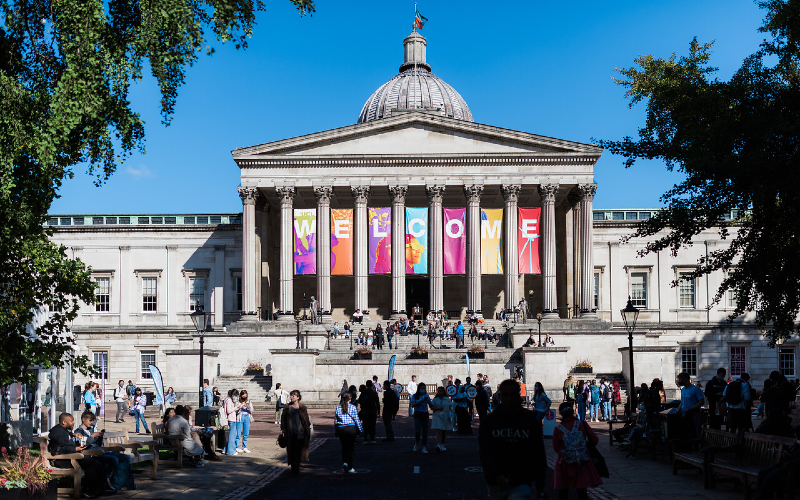

All over the world cities are growing, increasing their impact on the climate crisis, with buildings being associated with over a third of greenhouse gas emissions as people spend over 90% of their time indoors.
By 2050, urban population is projected to increase from four billion currently to seven billion people.
It is vital this growth is realised in a sustainable way where energy demand is reduced without compromising citizens’ wellbeing.
This module will focus on the intersection of the climate crisis, energy demand, buildings and the wellbeing of people.
You will be introduced to key concepts and open access data and tools for modelling and analysing building energy demand and occupant wellbeing at a large scale.
By the end of the module, you will be able to synthesise knowledge across disciplines to develop and evaluate strategies and comprehensive plans for sustainable urban living.
Week one: Key pillars
Climate change – causes, impacts and policies
Energy demand – resources, reduction opportunities and targets
Buildings – design and operation
Wellbeing – health, comfort, productivity
Week two: Methods
Data – sources and principles
Measurement – important parameters, theories and techniques
Modelling – decision-making tools and introduction to the open access software SimStock
Qualitative and participatory approaches
Week three: Case studies
Significant insights from UCL research projects
Presentations and mentoring from UK-based practitioners
Group project clinics for support with methods and tools
Final presentations and feedback from panel members
Dr Argyris Oraiopoulos
This module aims to:
- Address the urgent global challenge of urbanisation and its impact on the climate crisis, with relevance to environmental sustainability, building design, urban planning, public health and public policy.
- Develop understanding of how to balance urban growth with reduced energy demand and improved human well-being, in the context of cities projected to house 7 billion people by 2050.
- Offer an interdisciplinary approach that combines technical knowledge in energy efficiency and building design with social considerations such as health and comfort.
- Provide hands-on experience with open-access data and modelling tools, together with insights from leading research and practitioners, to equip you with practical skills and a holistic perspective on sustainable development.
- Give you the opportunity to tackle real-world problems and contribute to solutions that will shape the future of cities
Fee
2995 GBP
Groningen, Netherlands
When:
24 August - 28 August 2026
Credits:
2 EC
Read more

Geneva, Switzerland
When:
15 June - 19 June 2026
Credits:
3 EC
Read more

Bochum, Germany
When:
27 July - 07 August 2026
Credits:
3 EC
Read more