



Deadline: 01 April
Top course
Lyon, France
Business of Gastronomy, Wine & Hospitality
When:
29 June - 10 July 2026
Credits:
6 EC
Read more
Business & Entrepreneurship & Economics Summer Course
When:
05 July - 11 July 2026
School:
University of Groningen Summer Schools
Institution:
University of Groningen
City:
Country:
Language:
English
Credits:
2 EC
Fee:
700 EUR

In recent years, many low-income countries and emerging economies have undergone extensive financial reforms. Despite these reforms, many households and enterprises, especially in Africa, are still unable to participate in the financial sector. While it is well known that financial institutions and markets can help induce economic growth, it is much less clear how financial development can become inclusive and kick-start a process of sustainable economic growth with a positive effect on the poor.
This Summer School, presented by Stellenbosch Business School, Laval University and the University of Groningen, will discuss the major developments regarding research on financial inclusion, including microfinance. It will provide insight into how financial inclusion can induce sustainable growth in low-income economies, with explicit attention paid to African countries
Prof. Robert Lensink (University of Groningen), Prof. Charles K.D. Adjasi (Stellenbosch Business School), Prof Issouf Soumaré (FSA, Laval University) and Dr. Calumn Hamilton (University of Groningen)
This summer school is designed for Master’s (Research or Professional), PhD students, Postdocs and alumni. Students must be nominated by their home university, more information in the application procedure section.
It is expected that the participants have a sufficient command of the English language to actively participate in the discussions and to present their own work in English
Knowledge and Understanding
• Gain an in-depth understanding of the theoretical underpinnings of financial inclusion and sustainable economic growth.
• Conduct an in-depth study of theories on financial innovation, cross-border banking and their relation to economic development.
• Enhance your understanding of impact analysis theory and practice in developing countries.
Skills and Abilities
• Learn how to design randomised experiments to measure the impacts of financial inclusion interventions.
• Learn how to evaluate the inclusivity of financial products and build frameworks for designing inclusive financial products.
Judgement and approach
• Study the concept of financial inclusion and its role in economic growth.
• Analyse financial interventions, designs, innovations and market types in relation to the growth and development of developing countries.
Workload
Upon successful completion of the programme, the Summer School offers a Certificate of Attendance that mentions the workload of either 56 or 140 hours, depending on whether they would like to submit an additional assignment (28 hours corresponds to 1 ECTS). Students can apply for recognition of these credits to the relevant authorities in their home institutions, therefore the final decision on awarding credits is at the discretion of their home institutions. We will be happy to provide any necessary information that might be requested in addition to the certificate of attendance
Fee
700 EUR, standard fee, including weekday lunches, weekday coffee/tea breaks in the morning and afternoon and 2 dinners
Fee
550 EUR, for students of the organising universities (Stellenbosch University, University Laval and University of Groningen)
When:
05 July - 11 July 2026
School:
University of Groningen Summer Schools
Institution:
University of Groningen
Language:
English
Credits:
2 EC
Lyon, France
When:
29 June - 10 July 2026
Credits:
6 EC
Read more
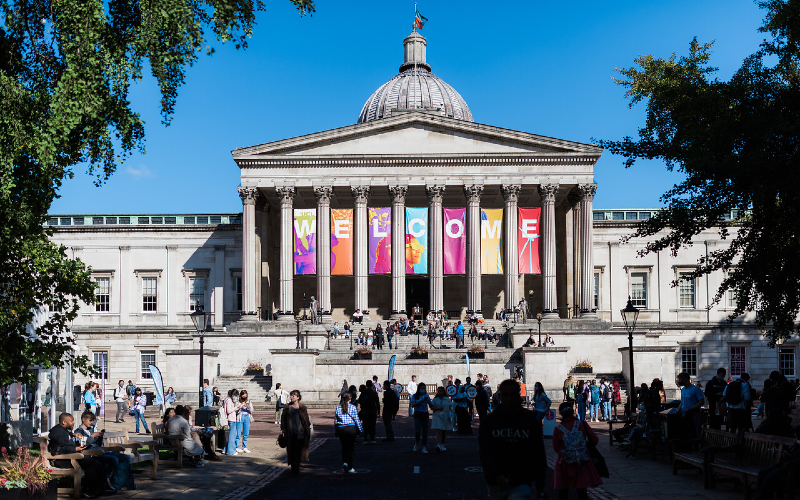
London, United Kingdom
When:
29 June - 17 July 2026
Credits:
7.5 EC
Read more
Copenhagen, Denmark
When:
22 June - 10 July 2026
Credits:
7.5 EC
Read more