



Top course
Amsterdam, Netherlands
Water Politics and Governance
When:
20 July - 24 July 2026
Credits:
0 EC
Read more
Environmental Studies & Human geography Summer Course
When:
20 July - 07 August 2026
School:
Institution:
UCL
City:
Country:
Credits:
7.5 EC
Fee:
2995 GBP
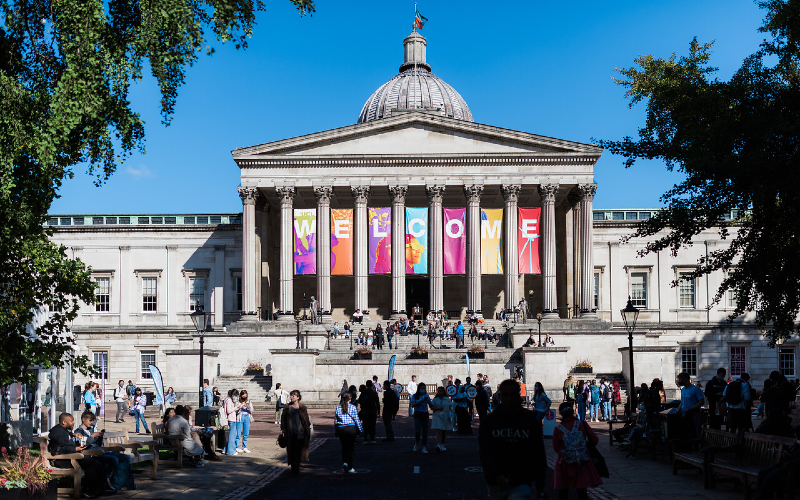

This module explores how London’s urban form and built environment are shaped by various policies, phenomena, and actors across different geographical and temporal scales. It equips students with a long-term historical view of development, examines how processes like privatisation and financialisation influence the planning system, and their consequences on everyday life in the built environment.
The module combines site visits alongside lectures and workshops. It introduces students to key frameworks for urban policy and planning shaping urban development processes within London. Given the compressed nature of the module, I have tried to not overburden it with too much reading, but recommend you try to read throughout the week – this will help you later for the assessments.
Rather than give broad-stroke history lessons that can be easily learned from other sources, I have designed the module around what I have learned from my own experiences of living, working, and researching in London, which has surprised me and expanded my perspectives. Students will engage with topics such as urban regeneration, infrastructure, and the “housing crisis.” Underpinning all topics is an appreciation for how narratives and discourse influence our understanding of reality, and the importance of grounding urban studies in the real, physical world. The insights, knowledge and skills developed on this module can ultimately be applied to cities around the world.
Week one: Grounding theories and information
This week introduces the key theoretical framings of the module and basic techniques for positioning and observation in urban studies.
You are introduced to London’s planning system, including governance structures, planning tools, and key agencies, and consider how planning operates as a state function that shapes everyday life.
Urban space is examined as something produced through discourse and narrative, using the two thousand and twelve Olympics as a case study to explore how representations and promises of the city are constructed.
Lectures, activities, and a site visit to the Queen Elizabeth Olympic Park support critical engagement with the relationship between planning, power, and lived experience in the built environment.
The week concludes with assessment guidance and an introduction to positionality, homelessness, and design as lenses for understanding exclusion and control in urban space.
Week two: Macro-forces in the built environment
This week focuses on the large-scale economic, political, and historical forces shaping London’s built environment.
You examine the legacies of colonialism, racism, inequality, and finance, and how these continue to influence urban form and patterns of segregation.
The idea of “regeneration” is explored through the London Borough of Lewisham, considering how redevelopment strategies affect transport, housing, culture, and social change.
A guided walk and site-based learning support critical engagement with major redevelopment areas, including Battersea Power Station and the Vauxhall Nine Elms Battersea Opportunity Area.
The week ends by examining how London’s “housing crisis” is defined, including the roles of affordability, viability, and housing as investment.
Week three: Housing and the policies behind everyday life
Housing is used as a lens to explore how policy decisions shape everyday life in the city.
Walking tours and site visits focus on the history of council housing and the impacts of neoliberalism and austerity on community infrastructure.
Redevelopment and displacement are examined through site visits to the Soanes Centre and Elephant and Castle, with a focus on the loss of cultural and trading spaces.
The week concludes with student presentations and assessment submission
Dr Christine Hannigan
This module aims to:
- Engage you in contemporary academic debates and research concerning the processes driving urban development in cities such as London.
- Examine current urban policies and decision‑making factors in London.
- Analyse the impacts of major development projects and key urban issues or problems.
- Explore the challenges associated with fostering sustainable urban development
Fee
2995 GBP
Amsterdam, Netherlands
When:
20 July - 24 July 2026
Credits:
0 EC
Read more

Syracuse, Italy
When:
13 June - 25 July 2026
Credits:
1 EC
Read more

Greifswald, Germany
When:
24 August - 04 September 2026
Credits:
4 EC
Read more